- Book Notes
- Posts
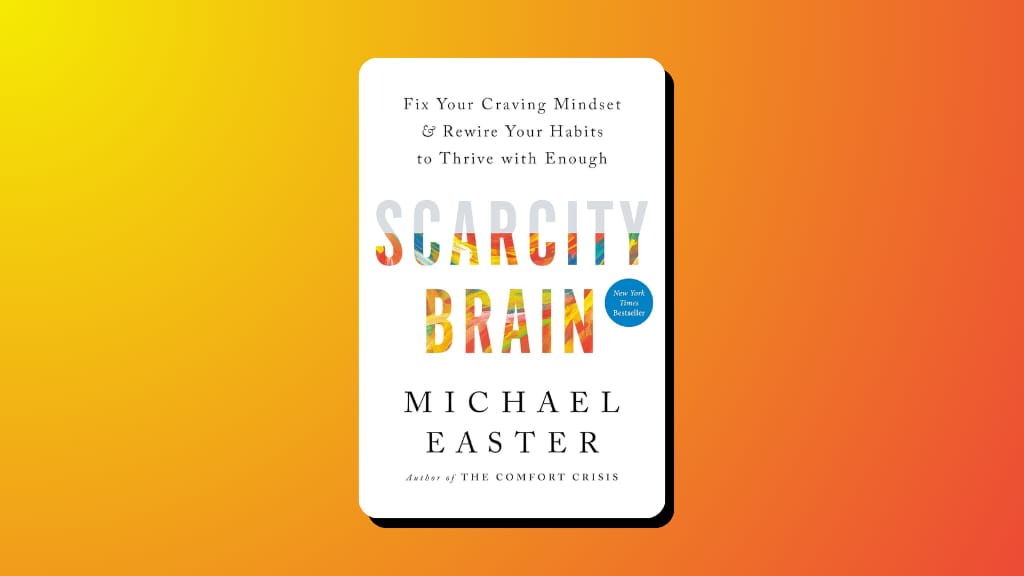
- Scarcity Brain by Michel Easter
Scarcity Brain by Michel Easter

 | “Humans hate uncertainty so much that we’d rather experience punishment.” |
 | “Immediately after the 2013 Boston Marathon bombings, researchers from the University of |
California, Irvine, investigated two groups. The first group was made up of people who watched six or more hours of televised bombing coverage. The second group was people who actually ran in the 2013 Boston Marathon. The finding: The first group, the bombing news bingers, were more likely to develop PTSD and other mental health issues. That’s worth restating: people who binge-watched bombing news on TV from the comfort of home had more psychological trauma than people who were actually bombed.”
 | “Embrace short-term discomfort to find a long-term benefit.” |
 | “If we wait until we’re twenty-one to drink, our odds of developing an alcohol addiction |
are 9 percent. But if we start drinking at fourteen or younger, the odds of addiction become 50 percent. A coin flip. These same figures hold for most drugs and maladaptive behaviors.”
 | “The worst habits are things we can do over and over and over in rapid succession— |
eventually to our detriment. These behaviors are often fun and rewarding in the short term but backfire in the long run.”
 | “As you increase your status by letting people know you’re great, you simultaneously |
decrease it by letting people know you’re great. And that makes you look like a jerk. The much harder but more effective way is to actually go out into the world and do great things. And then status arises naturally.”
 | “Make everyday decisions within 60 seconds. After that, analyzing more and |
more information only wastes time and doesn't steer us into significantly better outcomes.”
 | “Occasional deprivation makes the ordinary feel extraordinary.” |
 | “The behaviors we do in rapid succession—from gambling to overeating to |
overbuying to binge-watching to binge drinking and so much more—are powered by a “scarcity loop.” It has three parts. Opportunity—> Unpredictable Rewards—> Quick Repeatability”
 | “A scarcity cue is a piece of information that fires on what researchers call our |
scarcity mindset. It leads us to believe we don’t have enough. We then instinctually fixate on attaining or doing that one thing we think will solve our problem and make us feel whole.”
Community |
_____________________________________________________
_____________________________________________________
Request a book:
📚 Click here to request a book you want to learn about!
How can we improve the newsletter?
💡 Click here if you have an idea!
Introduce yourself:
🧠 Click here to take our subscriber survey!
_____________________________________________________
Hope you enjoyed this post!
Feel free to share the newsletter with friends and family.
Let’s make this world a wiser and better place!
P.S. If you aren’t already subscribed, feel free to subscribe for more wisdom.