- Book Notes
- Posts
- Lessons on Wisdom, Politics, Companies, Presence, & Happiness
Lessons on Wisdom, Politics, Companies, Presence, & Happiness

Hello subscriber!
In today’s newsletter:
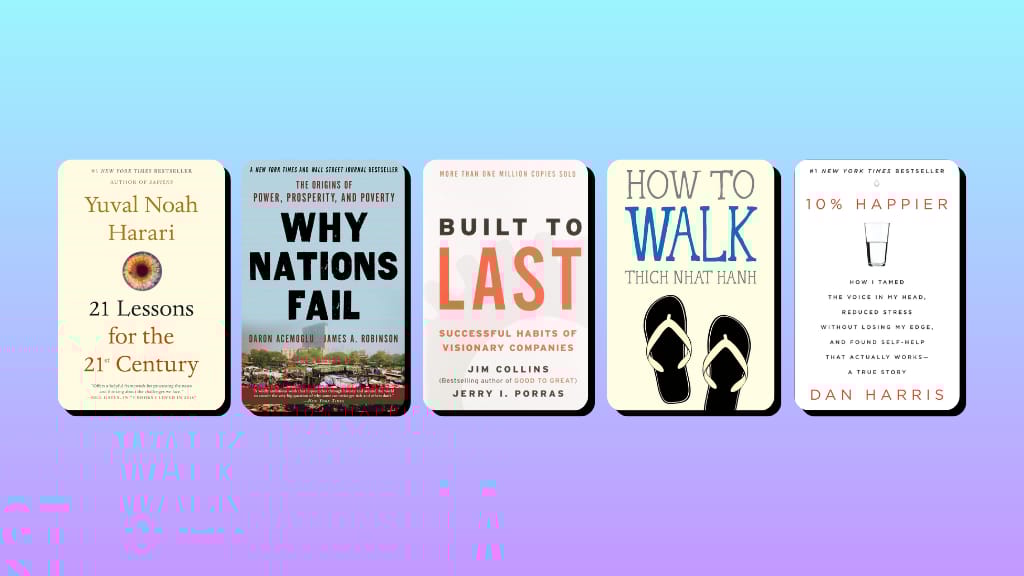
🚀 Thriving in the 21st Century.
🏛️ Why Some Nations Fail.
👔 Building a Company That Lasts.🚶 How to Walk.
☀️ Becoming 10% Happier.Here are 30 insights I have gathered for you this week:
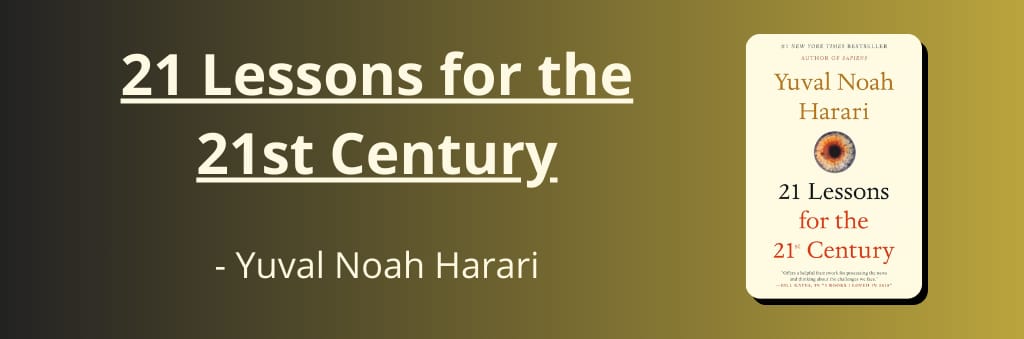
Embrace Uncertainty:
“Questions you cannot answer are usually far better for you than answers you cannot question.”Power of Clarity:
“In a world deluged by irrelevant information, clarity is power.”Tool Wisdom:
“Humans were always far better at inventing tools than using them wisely.”Humans Think in Stories:
“Humans think in stories rather than in facts, numbers, or equations, and the simpler the story, the better.”Paid Information:
"If you want reliable information, pay good money for it. If you get your news for free, you might well be the product.”Patience Spectrum:
“Philosophers are very patient people, but engineers are far less patient, and investors are the least patient of all.”

Power Abuse Creates Poverty:
“Poor countries are poor because those who have power make choices that create poverty.”Extractive Institutions:
“Nations fail today because their extractive economic institutions do not create the incentives needed for people to save, invest, and innovate.”Politics and Rules:
“Politics is the process by which a society chooses the rules that will govern it.”Creative Destruction:
“Economic growth and technological change are accompanied by what the great economist Joseph Schumpeter called creative destruction. They replace the old with the new. New sectors attract resources away from old ones. New firms take business away from established ones. New technologies make existing skills and machines obsolete.”Incentives to Innovate:
“A businessman who expects his output to be stolen, expropriated, or entirely taxed away will have little incentive to work, let alone any incentive to undertake investments and innovations.”Political Power Abuse:
“Those controlling political power will eventually find it more beneficial to use their power to limit competition, to increase their share of the pie, or even to steal and loot from others rather than support economic progress.”

Intellectual Duality:
“The test of a first-rate intelligence is the ability to hold two opposed ideas in the mind at the same time, and still retain the ability to function.”Clear Vision:
“Visionary companies are so clear about what they stand for and what they’re trying to achieve that they simply don’t have room for those unwilling or unable to fit their exacting standards.”Experimentation Success:
“Visionary companies make some of their best moves by experimentation, trial and error, opportunism, and—quite literally—accident. What looks in retrospect like brilliant foresight and preplanning was often the result of “Let’s just try a lot of stuff and keep what works.””Self-Understanding:
“It is better to understand who you are than where you are going—for where you are going will almost certainly change.”Inner Stability:
“The only truly reliable source of stability is a strong inner core and the willingness to change and adapt everything except that core.”Beyond Profit:
“Visionary companies pursue a cluster of objectives, of which making money is only one—and not necessarily the primary one.”

Mindful Walking:
“When you walk, arrive with every step. That is walking meditation. There’s nothing else to it.”Ancestral Walking:
“When we walk, we can walk for our ancestors and future generations. Maybe they had to walk with sorrow; perhaps they were forced to march or migrate. When we walk freely, we are walking for them.”Presence Makes Joy:
“If you’re concentrated and you focus your attention on the cup of tea, then the cup of tea becomes a great joy.”Breath and Presence:
“When we return to our breathing, we return to the present moment, our true home. There’s no need for us to struggle to arrive somewhere else. We know our final destination is the cemetery. Why are we in a hurry to get there? Why not step in the direction of life, which is in the present moment?”Be Grateful for Your Feet:
“You have feet, and if you don’t make use of them it’s a loss and a waste. Someone is telling you now so that in the future you cannot say: “No one told me that it was important to enjoy using my feet.””Freedom from Past:
“Most of us walk without chains, yet we aren’t free. We’re tethered to regret and sorrow from the past. We return to the past and continue to suffer. The past is a prison. But now you have the key to unlock the door and arrive in the present moment.”
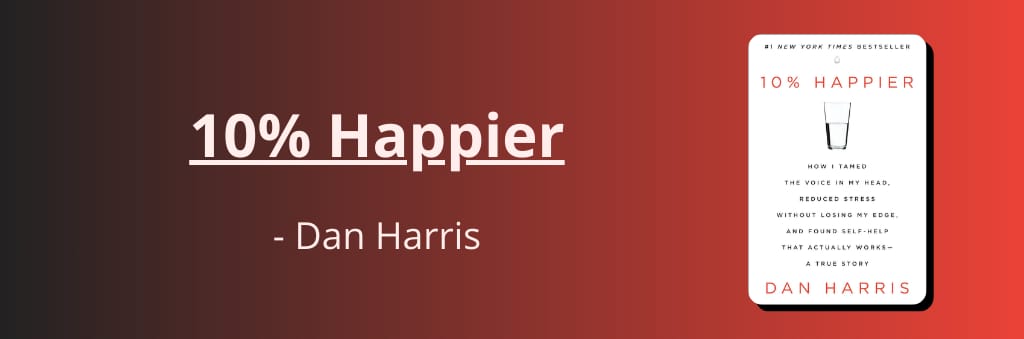
Embrace the Present:
“Make the present moment your friend rather than your enemy. Because many people live habitually as if the present moment were an obstacle that they need to overcome in order to get to the next moment. And imagine living your whole life like that, where always this moment is never quite right, not good enough because you need to get to the next one. That is continuous stress.”Mindful Response:
“What mindfulness does is create some space in your head so you can, as the Buddhists say, “respond” rather than simply “react.” In the Buddhist view, you can’t control what comes up in your head; it all arises out of a mysterious void. We spend a lot of time judging ourselves harshly for feelings that we had no role in summoning. The only thing you can control is how you handle it.”Be Happy:
“There’s no point in being unhappy about things you can’t change, and no point being unhappy about things you can.”Happiness Paradox:
“Pursuit of happiness becomes the source of our unhappiness.”True Meditation:
“Meditation is not about feeling a certain way. It’s about feeling the way you feel.”
Impermanent World:
“Everything in the world is ultimately unsatisfying and unreliable because it won’t last.”
Community |
_____________________________________________________
_____________________________________________________
Request a book:
📚 Click here to request a book you want to learn about!
How can we improve the newsletter?
💡 Click here if you have an idea!
Introduce yourself:
🧠 Click here to take our subscriber survey!
_____________________________________________________
Hope you enjoyed this post, see you next week!
Feel free to share the newsletter with friends and family.
Let’s make this world a wiser and better place!
P.S. If you aren’t already subscribed, feel free to subscribe for more wisdom.