- Book Notes
- Posts
- Seeking Freedom With Jiddu Krishnamurti
Seeking Freedom With Jiddu Krishnamurti

Hello subscriber!
In today’s newsletter:
🥦 Habits for a better life.
📜 Finding ancient happiness in a modern world.
🤝 What creates great teams.
🚀 Living up to your full potential.Here are 34 insights I have gathered for you this week:
The 7 Habits of Highly Effective People— Stephen R. Covey |  (Amazon) |
Listen to Understand:
Many people listen not to understand but to formulate their replies.Look for the Potential:
When you treat someone based on their potential and not just their current state, they are likely to evolve into that potential.Perception of Reality:
Our view of the world is shaped not by the world itself, but by our own perceptions and conditioning.Importance of Trust:
High levels of trust simplify and accelerate communication, making it more effective and immediate.Subjectivity in Perception:
It is possible for two individuals to view the same thing differently and both be correct; our perceptions are influenced by psychological factors, not just logic.Good Thougts = Good Consequences:
Thoughts give rise to actions, actions develop into habits, habits form character, and character determines destiny.Power of Response:
It’s not the events in our lives that hurt us, but rather our reactions to them.Work on What You Can Control:
The most effective way to improve my circumstances is to work on myself, the one aspect I can control.
Freakonomics— Steven D. Levitt & Stephen J. Dubner | 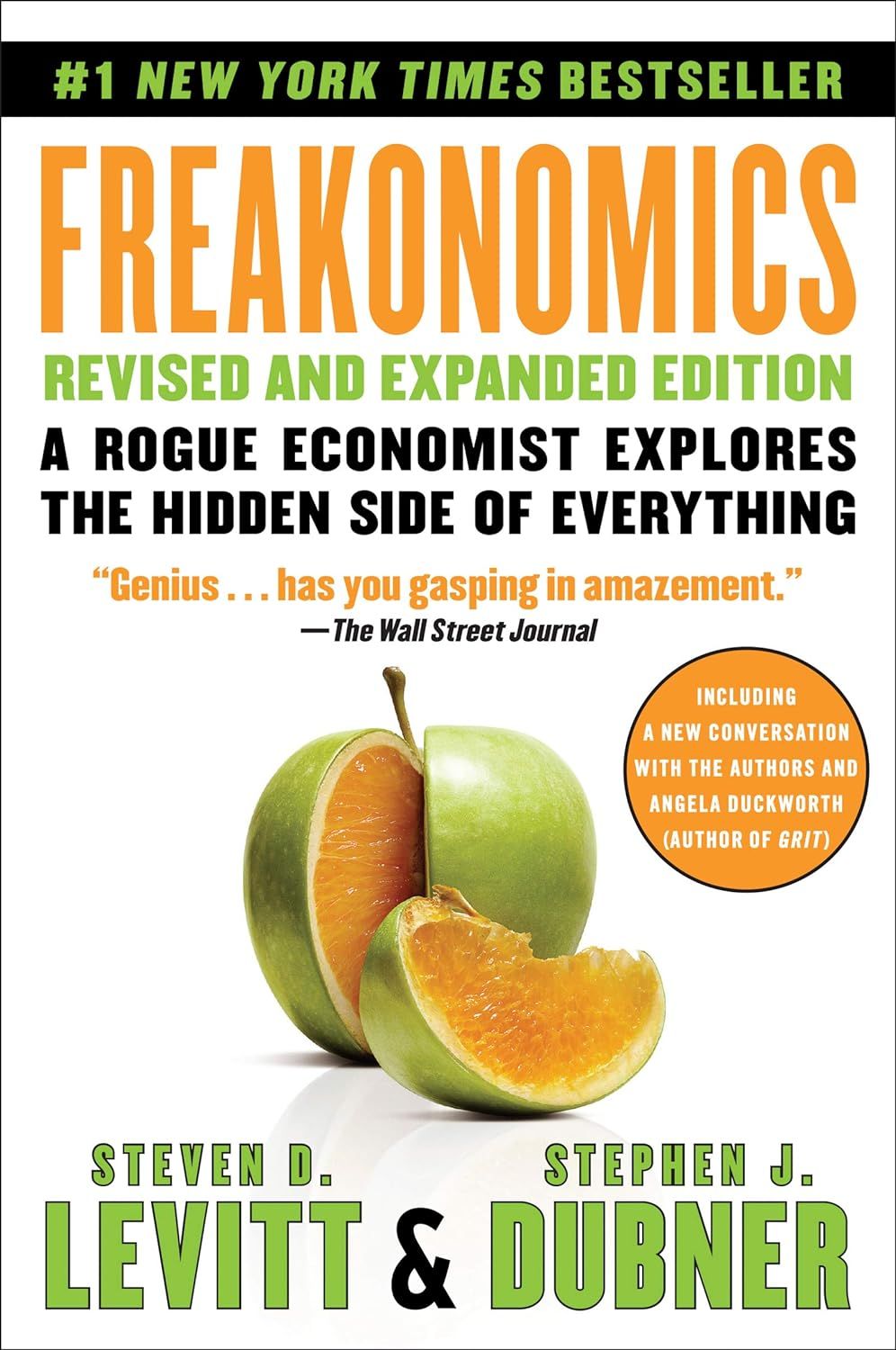 (Amazon) |
Morality vs. Economics:
Morality reflects how people wish the world functioned, while economics shows how it actually functions.The Role of Information:
Information can serve various roles—guidance, weapon, peace offering, or deterrent, depending on its user and context.Dependence on Experts:
People often rely on experts either because they lack specific information, find the complexity overwhelming, or are intimidated by the expert’s authority.Varieties of Incentives:
There are three principal types of incentives that influence human behavior: economic, social, and moral.Punishment and Crime:
Strong evidence suggests that harsher punishment tends to correlate with reduced crime rates.
The Happiness Hypothesis— Jonathan Haidt | 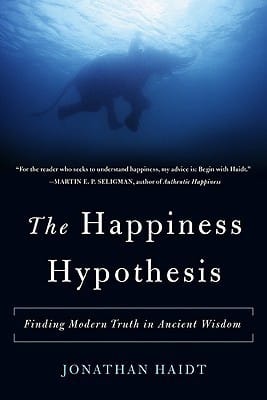 (Amazon) |
Guidance Through Literature:
Depending on your love life's stage, turn to poetry to celebrate passion, psychology to understand relationship dynamics, or philosophy to find solace post-breakup.Necessity of Love and Work:
Just as plants need water and sun, humans require love and productive endeavor to thrive.Perception of Events:
Nothing is inherently good or bad; our thoughts shape our views.Impact of Relationship Conflicts:
Constant conflicts, whether with colleagues or spouses, significantly dampen happiness.Value of Simplicity:
Working less and spending more time engaging in enjoyable activities with family or on vacations can greatly enhance quality of life.Child Rearing:
Providing children with affection and a secure environment empowers them to explore and independently navigate the world.Importance of Reciprocity:
Reciprocity forms relationships and serves as the fundamental exchange system in social interactions.
The Five Dysfunctions of a Team— Patrick Lencioni |  (Amazon) |
Trust and Team Dynamics:
Trust in a team implies believing that challenges from team members are aimed at collective improvement.Building Team Trust:
Teamwork starts when members overcome their fear of being vulnerable, which builds trust.Candidness in Teams:
Effective teams openly admit faults and concerns, fostering an environment free from fear of criticism.Importance of Openness:
Without the opportunity to express and have their perspectives valued, individuals may withhold full commitment.Politics and Authenticity:
Political behavior in teams occurs when members act based on desired reactions rather than honesty.Teamwork as a Competitive Edge:
The strength and rarity of genuine teamwork make it the ultimate competitive advantage.Value of Unified Direction:
Aligning everyone's efforts in the same direction can give any organization a dominant position in any market.Conflict and Trust:
A lack of trust among team members stifles meaningful conflicts that are essential for growth.
Think on These Things— Jiddu Krishnamurti |  (Amazon) |
Accepting Impermanence:
Our suffering stems from trying to make life permanent, which contradicts nature's transient essence.Fear Kills Potential:
As we age, fears often accumulate—fear of uncertainty, loss, social expectations, or death, hampering our ability to live fully and intelligently.The Trap of Seeking Fame:
The aspiration for fame traps us, hindering our freedom.Core of True Education:
True education teaches us how to think independently rather than conforming to prescribed thoughts.Understanding Freedom:
True freedom is found in understanding ourselves moment by moment, without conforming to societal or historical traditions.Wisdom in Uncertainty:
There is vitality and truth in continuously seeking and exploring, without claiming to possess final knowledge.
Community |
_____________________________________________________
_____________________________________________________
Request a book:
📚 Click here to request a book you want to learn about!
How can we improve the newsletter?
💡 Click here if you have an idea!
Introduce yourself:
🧠 Click here to take our subscriber survey!
_____________________________________________________
Hope you enjoyed this post, see you next week!
Feel free to share the newsletter with friends and family.
Let’s make this world a wiser and better place!
P.S. If you aren’t already subscribed, feel free to subscribe for more wisdom.