- Book Notes
- Posts
- The Better Angels of Our Nature by Steven Pinker
The Better Angels of Our Nature by Steven Pinker

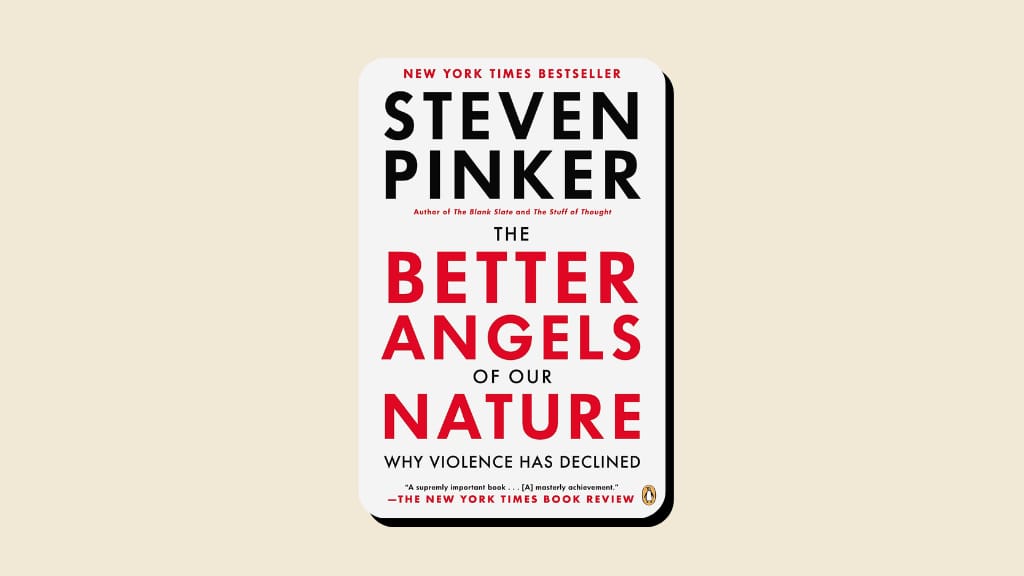
Overview:
The main message of The Better Angels of Our Nature is that violence has significantly declined over human history, and understanding why can help us sustain this trend.
The book was published in 2011.
Q&A: "The Better Angels of Our Nature"
Q: I hear you’ve read The Better Angels of Our Nature. What’s the book about? Why does Pinker believe violence has declined?
A: Pinker presents a hopeful perspective, showing that violence has decreased dramatically over centuries. He attributes this decline to the "better angels" of human nature—factors like empathy, self-control, moral reasoning, and the spread of knowledge. Essentially, he believes that societal changes and human progress have helped suppress our violent impulses.
Q: But isn’t there still so much violence in the world? How does Pinker explain that?
A: He acknowledges that violence still exists, but he argues that, statistically, we’re far less violent today than in the past. Pinker compares ancient and modern rates of war, crime, and other forms of brutality, showing a steep decline over time. He explains that as societies have developed laws, governments, and global cooperation, the incentives for violence have reduced.
Q: What are these “better angels” exactly?
A: The “better angels” are qualities that help us avoid violence: empathy, which lets us understand and care about others; self-control, which curbs impulsive aggression; moral thinking, which shapes our values; and reason, which helps us make decisions that benefit everyone. According to Pinker, these qualities have been encouraged and developed over time through education, culture, and social norms.
Q: How does Pinker suggest we continue reducing violence?
A: He emphasizes education, open communication, and the importance of understanding history. Pinker argues that knowing about past progress can inspire us to keep moving forward. He also suggests fostering empathy and encouraging societies to work together globally, as shared goals make people less likely to resort to violence.
Q: Does he think violence will ever be completely eliminated?
A: Pinker is cautious here. He doesn’t claim we’ll see a world without violence, but he’s optimistic that we can continue reducing it. He suggests that by fostering the “better angels” in ourselves and our societies, we can keep moving in the right direction—even if it’s an ongoing process.
Reflection Thought:
Which “better angel” do you feel most connected to—empathy, self-control, moral thinking, or reason? How could strengthening it help you create positive change?
Community |
1️⃣ Talk Like TED | 2️⃣ Four Thousand Weeks | 3️⃣ The Everything Store |
Quote for you:
“Peace is not the absence of conflict, it is the ability to handle conflict by peaceful means.”
– Ronald Reagan

Thanks for reading, hope you enjoyed this post!